
2026-08-03 · 7 min read
Multiboard vs Gridfinity: which storage system fits your space?
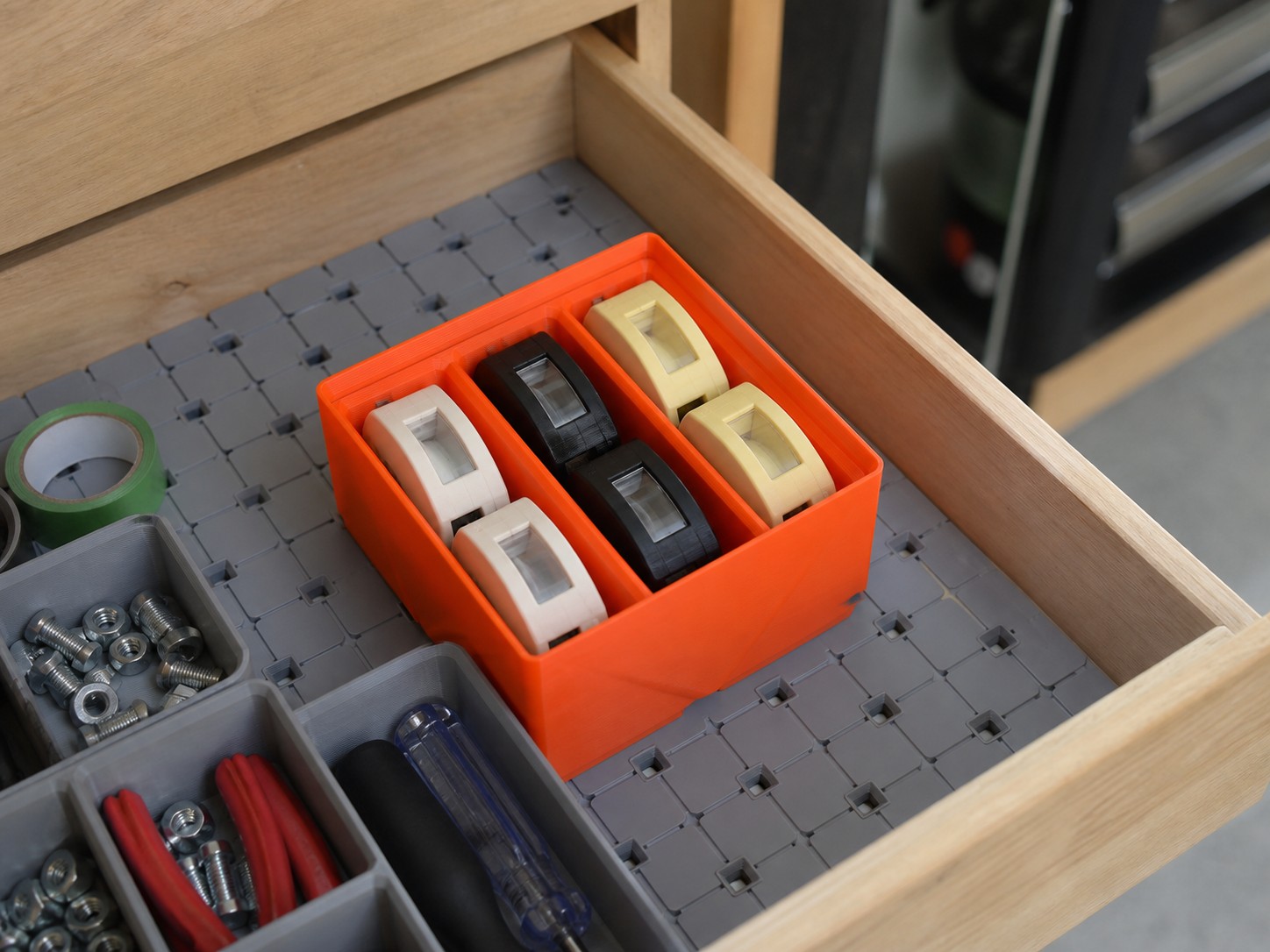
You are picking between the two most popular 3D printed storage systems. Here is the answer most people want: use Gridfinity for drawers and desks. Use Multiboard for walls. Use both if you have both. The rest of this page is the why.
The core difference in one sentence
Gridfinity organizes flat surfaces. Multiboard organizes walls. They were built for different problems, so they do not really compete. They complement.
If you only have a drawer to fix, Gridfinity is the answer. If you only have a wall, Multiboard. The two systems share no parts, but they live happily in the same shop because they own different parts of your space.
Quick comparison table
| Feature | Gridfinity | Multiboard (Multibuild) |
|---|---|---|
| Surface | Drawer, desk, shelf | Wall |
| Format | Baseplate plus bins | Tiles plus click-in accessories |
| Creator | Zack Freedman | Jonathan Kobylanski (Keep Making) |
| Released | 2022 | 2023 |
| Grid | 42 mm squares | Holes 25 mm apart |
| License | Open (MIT), anyone can sell prints | Keep Making license controls sellers |
| Holds | Small parts and hand tools | Power tools, about 165 lb per panel in community tests |
| Best material | PLA indoors, PETG for shop drawers | PETG for garages, PLA indoors |
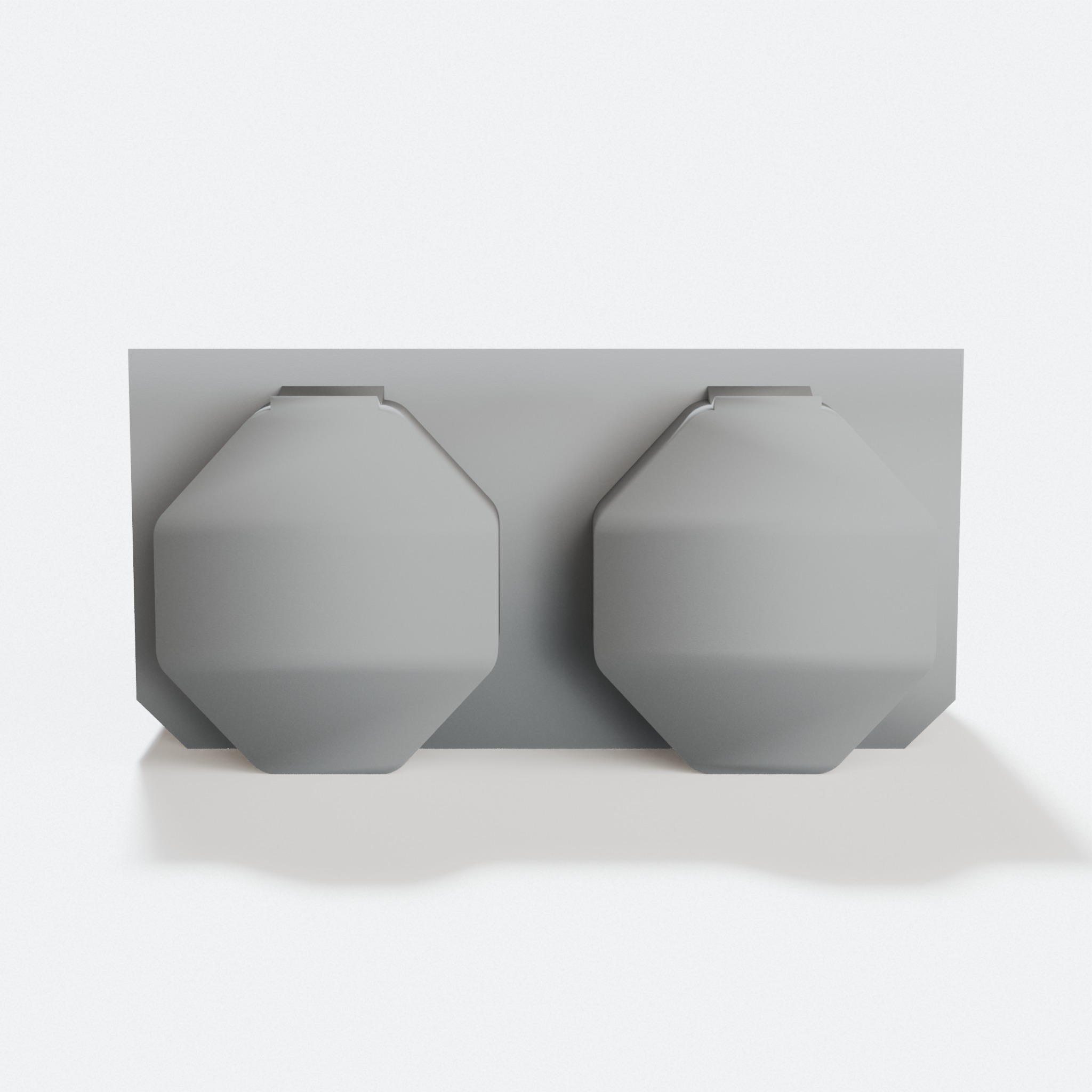
The verdict box: wall or drawer?
Drawer chaos: sockets in piles, screws rolling around, a junk drawer you dig through. That is Gridfinity. Start with our drawer kit planner.
Wall chaos: tools leaning in corners, cords on the floor, nothing at grabbing height. That is Multiboard. Start with hooks, bins, and shelves.
Why people search for a Gridfinity wall
A common search is "Gridfinity wall." People love Gridfinity in their drawers and want the same feeling on a wall. But Gridfinity was not designed for vertical use. The bin clip is made for gravity pulling straight down. Mount a baseplate on a wall and heavy bins will work loose over time.
Multiboard exists because someone built a wall system from scratch instead of tilting a drawer system. Its clips, threads, and mounts are all designed for things hanging on a wall. If you searched for a Gridfinity alternative because wall mounting frustrated you, the thing you wanted is Multiboard.
Gridfinity in short
Zack Freedman shared Gridfinity in 2022. A flat baseplate carries a grid of 42 mm squares. Bins snap in, from a 1x1 cup for screws to wide trays for tools. Heights step in 7 mm units. The spec is open under the MIT license, so anyone can design for it and anyone can sell prints of it. The ecosystem is huge: thousands of bin designs exist for specific tools.
Where it falls short: walls, tall items like hammers, and anything bigger than a drawer can hold. Full sizes and specs are in our dimensions cheat sheet.
Multiboard in short
Jonathan Kobylanski at Keep Making released Multiboard in 2023. It is now part of the Multibuild family. Printed tiles cover the wall. Every hole in a tile is threaded, so parts can screw in, not just clip in. Hooks, bins, shelves, drawers, and rails are all part of one system. Community testing puts a mounted panel around 165 pounds.
Where it falls short: drawers, tiny parts, and print time. A full wall takes days of printing if you do it yourself. And the license matters: printing for yourself is free, but selling printed tiles needs a license from Keep Making. We respect that. We sell compatible accessories now and hold tile kits until licensing is done.
What about OpenGrid?
Some shoppers want a fully open wall system. That is OpenGrid, a free system by David D (BlackjackDuck). It is simpler than Multiboard and anyone can sell parts for it. Multiboard has the bigger accessory family. OpenGrid has zero license friction. They use different grids, so pick one per wall.
Which costs more to set up?
Gridfinity, per square foot, costs less. Its parts are smaller and print faster. A wall costs more than a drawer because tiles are big and there are many of them. Both pay you back every time you find a tool in two seconds.
Printing it all yourself is the hidden cost. A full drawer runs 30 hours or more of print time. A single wall board has taken makers 95 hours. Our print-or-buy math covers the drawer side.
FAQ
Is Multiboard better than Gridfinity?
Neither is better. They solve different problems. Gridfinity organizes drawers and desks. Multiboard organizes walls. Pick by the surface you need to fix first.
Can Multiboard and Gridfinity work together?
Yes, and most serious shops run both. Gridfinity fills the bench drawers while Multiboard covers the wall above. They do not connect to each other, but they never need to.
Which is cheaper to set up?
Gridfinity, in most cases. Its parts are smaller, so one drawer costs less than one wall.
Wall or drawer: which do I need?
Look at your mess. Piles in drawers mean Gridfinity. Tools leaning in corners mean a wall system. Both messes mean both systems.
Ready to start? Plan a drawer in the Gridfinity generator or browse Multiboard parts we print.
Our guides are the home for how-to answers. Read the guide.
Want something printed?
Browse the shop or upload your own file for a price in seconds.