
2026-08-03 · 6 min read
How to set up a Gridfinity drawer: the simple guide
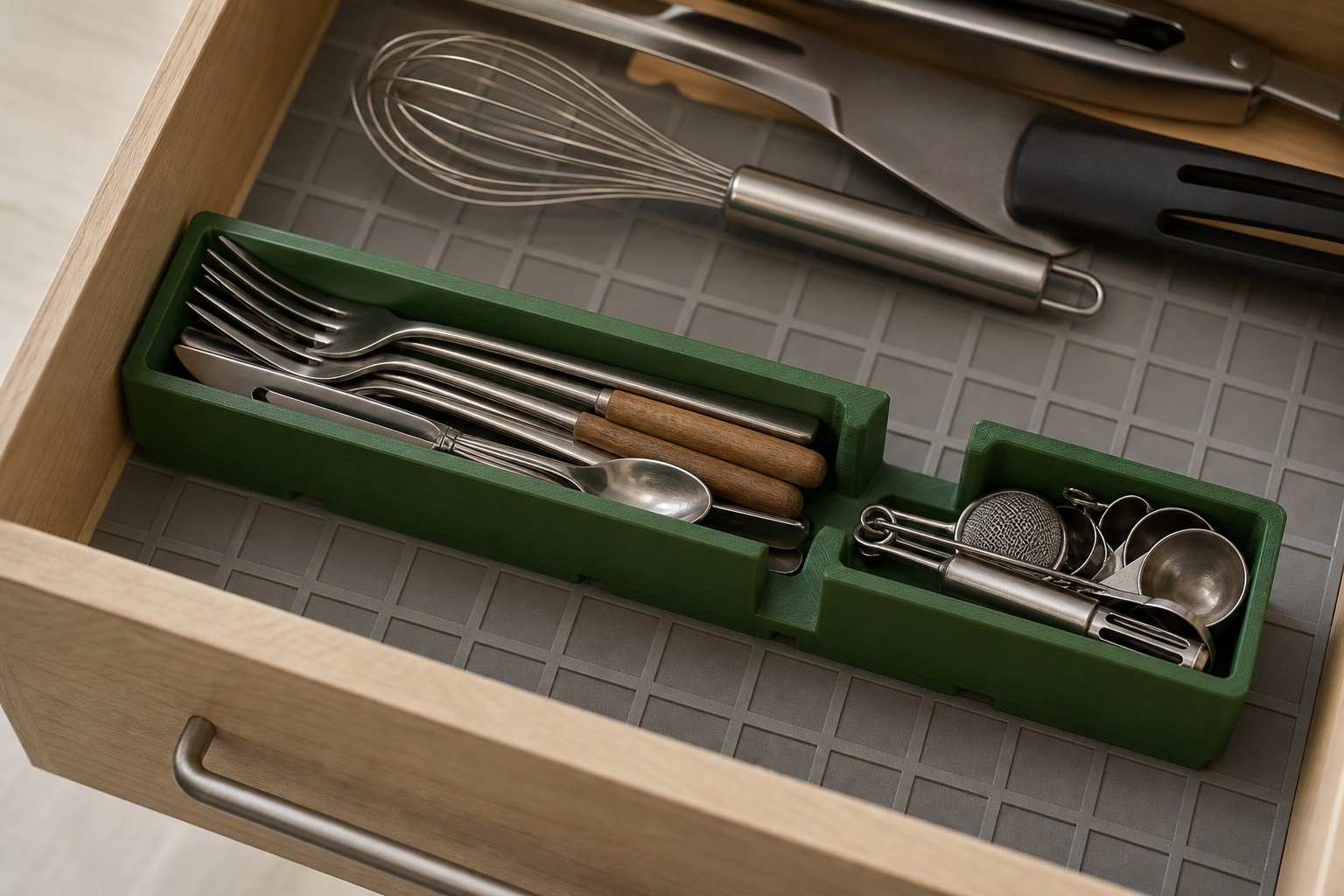
Setting up a Gridfinity drawer takes four steps. Measure the inside of your drawer. Fit baseplates to that space. Pick bins for the stuff you own. Drop the bins in and start using it. That is the whole system. No screws, no glue, no tools.
This guide walks through each step, based on how the best makers on YouTube actually do it, including Zack Freedman, the creator of Gridfinity.
What is Gridfinity?
Gridfinity is a free storage system invented by Zack Freedman. It uses a grid of 42 mm squares. Baseplates make the grid. Bins snap into the grid. Every bin is built on the same squares, so every bin fits every baseplate. You can move bins around any time. The deep answer lives in What is Gridfinity?
The goal is not to cram in more stuff. The goal is to see and grab your stuff fast. Every item gets a home. Cleanup means dropping things back in their bins.
Step 1: measure your drawer
Measure the inside of the drawer, not the outside. You need three numbers:
- Width, side to side
- Depth, front to back
- Height, from the floor of the drawer to the top edge
A tape measure works. Cheap digital calipers work better for the height. Write the numbers down in millimeters if you can. One inch is 25.4 mm.

Step 2: figure out your grid
Divide the width by 42. Divide the depth by 42. Drop the leftovers. That is your grid.
Example: a drawer that is 400 mm wide and 500 mm deep. 400 divided by 42 is 9 and a bit. 500 divided by 42 is 11 and a bit. So you get a 9 by 11 grid. That is 99 squares to fill.
Almost no drawer divides evenly by 42. There is always a small gap left over. That is normal. A snug baseplate with a wider border can fill the gap so nothing slides around. Our drawer planner does this math for you. You type in your drawer size and it plans the baseplates.
Step 3: pick your bins
Here is the trick the pros use: take everything out of the drawer first. Lay it on a table. Group like with like. Now you know what bins you need.
Bins come in footprints and heights. The footprint is how many squares the bin covers. The height uses 7 mm units, called u.
| Bin height | Real height | Good for |
|---|---|---|
| 2u | About 18 mm | Shallow drawers, flat items, batteries |
| 3u | About 25 mm | Screws, small parts, most kitchen items |
| 4u | About 32 mm | Bigger parts, cables, tape |
| 6u | About 46 mm | Deep drawers, bulky stuff |
A good starter mix for most drawers:
- A few 2x2 bins for the big stuff
- Some 2x1 bins, plain or split into two slots
- Lots of 1x1 bins for small parts
Do not overthink it. Zack Freedman says it best: if you pick the wrong bin, swap it later. The grid makes changing your mind cheap.
Step 4: drop everything in
Set the baseplates in the drawer. Snap the bins into the grid. The plates have a small lip that keeps bins from sliding, but bins still lift right out. Put your most-used items at the front. Long items go along the back.
You do not need magnets. Gravity holds everything down in a drawer. Magnet versions exist for carts and cases, and we print those on request.
How many bins do you need?
Count your grid squares and fill them. A 9 by 11 kitchen drawer has 99 squares. A mix like this fills it exactly:
| Bin | Squares each | Count | Squares used |
|---|---|---|---|
| 2x2 bin | 4 | 10 | 40 |
| 2x1 split bin | 2 | 12 | 24 |
| 1x1 bin | 1 | 35 | 35 |
| Total | 57 bins | 99 |
That sounds like a lot of bins. It is also why a ready kit beats printing one bin at a time. Makers who printed a full drawer themselves report 20 minutes and more of printer time per square. A 99 square drawer is more than 30 hours of printing before failures. The full math is in print it or buy it.
Common mistakes to avoid
- Packing bins too tight. Give tools breathing room. Go one bin size up when in doubt.
- Making tool slots an exact fit. Snug looks nice but is a pain to use every day.
- Doing the whole shop at once. Start with one drawer. Learn what you like. Then do the next one.
- Ignoring the leftover gap. Plan the border first so the grid sits tight.
FAQ
Why is the grid 42 mm?
Zack Freedman picked 42 because it divides evenly into many common sizes. It is also a joke from a famous science fiction book. The size is permanent, so parts you get today will match parts you get years from now.
Do bins stack?
Yes. Each bin has a lip so another bin can sit on top. Stacking works best two high.
Do I need magnets?
No. In a drawer, gravity does the work. The plate lip stops sliding.
What if my drawer is shallow?
Use 2u bins. They are about 18 mm tall. If your drawer has less than about 25 mm of clear height, standard bins will not fit.
Are your bins printed here?
Yes. Every baseplate and bin we sell is printed in the USA. Start in the drawer planner and the kit arrives ready to drop in.
Watch more
These creators taught the world Gridfinity. Their videos are worth your time.
Our guides are the home for how-to answers. Read the guide.
Want something printed?
Browse the shop or upload your own file for a price in seconds.