
2026-08-03 · 7 min read
3D prints that sell: what actually makes money in 2026
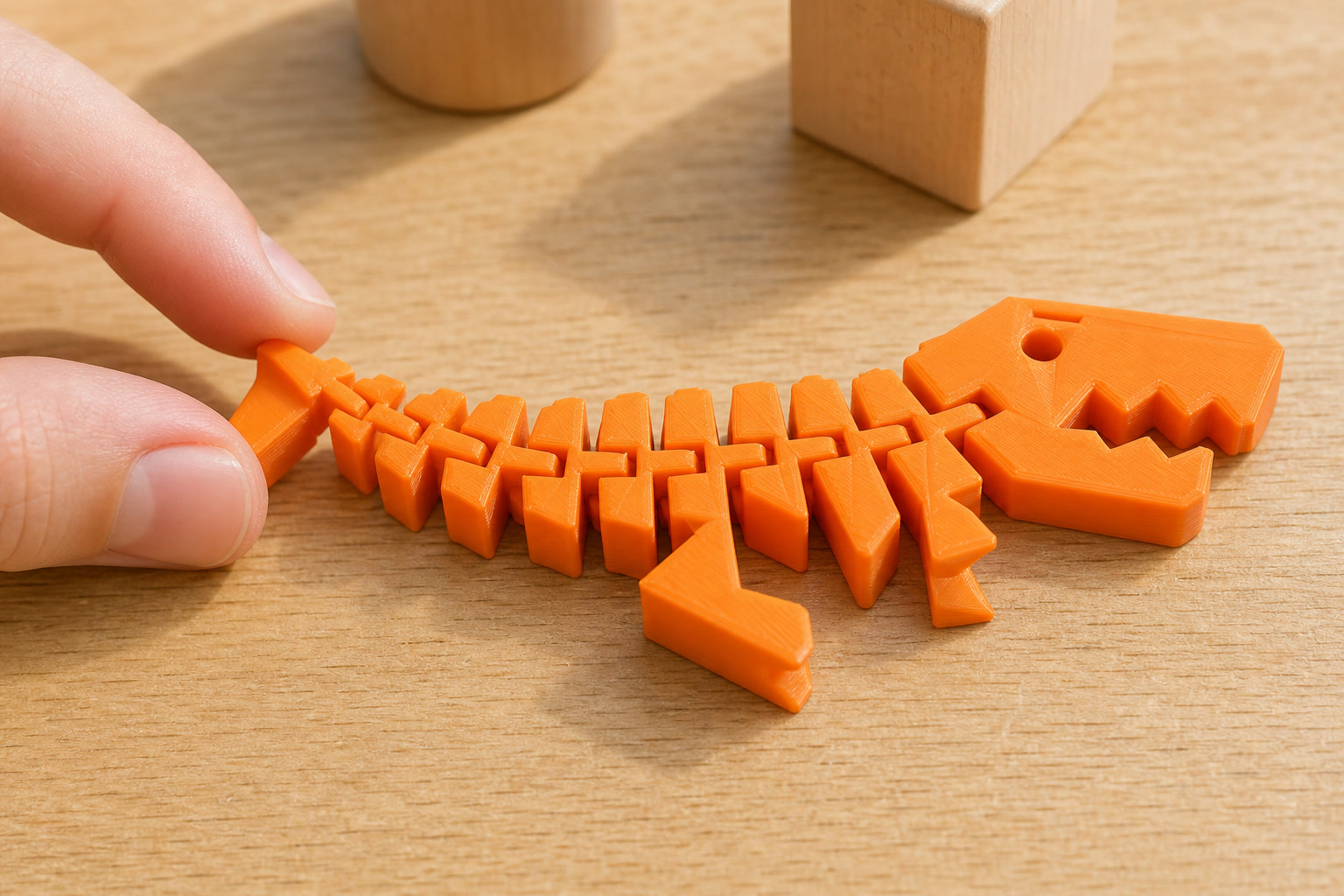
The 3D prints that sell are the ones that do a job. Organizers that tame a messy drawer. Holders that fit one exact thing. Toys with a trick, like clickers and flexi animals. Decor that also works, like a skull that holds a plant. Cute alone does not sell. Useful plus a little delight sells all day.
This question is hot right now because seller videos are hot. A creator who designs custom fidget clickers pulled 6 million views showing her process. Meanwhile a video calling out lazy "3D printed slop" at craft fairs pulled 700 thousand. Both videos tell the same truth from two sides: buyers can tell effort from no effort.
What actually moves
| Category | Why it sells |
|---|---|
| Organizers | They solve a visible daily problem. Drawer grids, cable catches, tool racks. |
| Exact-fit holders | A mount made for one specific item beats a generic one every time. |
| Fidget toys | Demo themselves in five seconds. Huge on video, cheap to gift. |
| Functional decor | A planter, a lamp shade, a bookend. Pretty plus a purpose. |
| Personalized pieces | A name or a date makes an ordinary print a keeper. |
The slop trap
Here is the mistake the callout videos roast: grab the most downloaded free file, print it thin and rough, charge craft-fair prices. Buyers pick it up, feel the flimsy walls, and put it down. The sellers who win do the opposite. They print solid, they finish clean, and they sell designs they have real rights to.
That last part matters more than most new sellers think. Every design file has a license. Some allow selling prints, many do not. Open systems like Gridfinity use the MIT license, which allows commercial printing. Other designers sell commercial licenses or forbid selling entirely. Check before you sell. It protects you and it pays the people who design the things.
Two ways to sell without owning a printer
You design things. Our creator program puts your designs in this shop. We print every order in the USA, ship it, and handle the customers. You earn a commission on every sale and keep full ownership of your work.
You already sell things. Say you sell on a marketplace and orders are outgrowing your machine. Our makers and sellers program prints your parts and ships them in plain boxes straight to your buyers. Your files stay saved for reorders. No minimum.
Honest money talk
Most people who sell prints make side money, not rent money. The winners share three habits. They pick one niche and go deep. They solve problems people already search for. And they treat quality as the product, because in this market it is.
Quick questions, quick answers
What sells best? Useful items with a built-in wow: organizers, exact-fit holders, and fidget toys lead.
Do I need a printer to start? No. Designers join through the creator program. Sellers route production through makers and sellers.
Is selling printed Gridfinity legal? Yes. Gridfinity is MIT licensed, which allows commercial prints. Always check each design's license.
How much can I really make? Ranges are wide. Treat it as a side income first. Sellers who niche down and keep quality high are the ones that grow.
Watch more
These creators sparked this article. Their videos are worth your time.
Want something printed?
Browse the shop or upload your own file for a price in seconds.